Psychiatry & Neuromodulation

TMS for PTSD

Advanced neuromodulation to help your brain process trauma, escape the cycle of hyperarousal, and allow you to reclaim your present life.

Non-Med
Drug-Free Care
Targeted
Neural Reprogramming
0
Sedation Required
100%
Outpatient
Understanding Treatment

Rewiring the Trauma Response

How exact magnetic stimulation can break the neurological looping of fear and panic.

Section 01

The Neurological Impact of Trauma

PTSD is an acquired, physical injury to the brain's fear-processing circuitry.

Post-Traumatic Stress Disorder alters the physical structure and functional connectivity of the brain. When trauma occurs, the amygdala (fear center) becomes hyper-reactive, while the ventromedial prefrontal cortex (the area responsible for regulating the amygdala and recognizing safety) becomes suppressed.

This communication breakdown traps the brain in a perpetual state of threat detection. This is why individuals with PTSD may react to non-threatening stimuli as if they are life-threatening, and why cognitive therapy alone is sometimes insufficient—the biological alarm system must be reset.

TMS addresses the physical hardware of the brain, giving talk therapy and processing techniques a healthier space to take root.
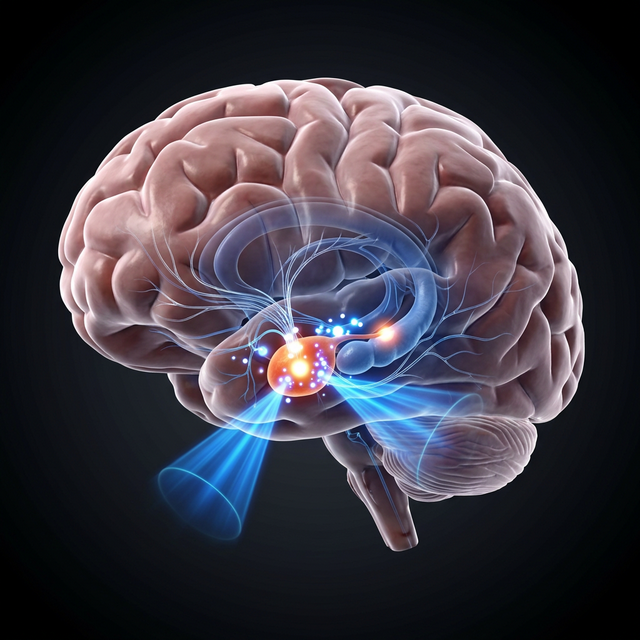

Brain mapping of PTSD
Section 02

Resetting the Alarm

Using targeted magnetic stimulation to restore communication between the prefrontal cortex and amygdala.

Patient receiving TMS therapy

By delivering specific magnetic pulses to the prefrontal cortex, TMS strengthens the neural pathways responsible for "top-down" emotional regulation. As neuroplasticity occurs, the prefrontal cortex regains its ability to down-regulate the hyperactive amygdala.

Additionally, TMS can be applied using inhibitory frequencies the right side of the brain to directly dampen the overactive fear response, making patients feel physically safer in their bodies.

01

Regulatory Support

Enhancing the "executive" areas of the brain to regain control over emotional flooding.

02

Fear Dampening

Down-modulating the deep brain structures stuck in perpetual "fight or flight."

03

Trauma Processing

Creating a calmer neural baseline enables patients to process trauma more effectively in therapy.

Section 03

PTSD Symptoms Targeted by TMS

Addressing the core experiential clusters of the disorder.

Hyperarousal

Reducing startle responses, chronic edginess, irritability, and the inability to relax in safe environments.

Intrusive Memories

Helping to disconnect the overwhelming emotional distress tied to intrusive thoughts and flashbacks.

Avoidance & Numbing

Alleviating the depressive-like symptoms of emotional bluntness and total avoidance of triggering stimuli.

The Benefits of Non-Systemic Care

Why Consider TMS for PTSD?

A physiological approach to a disorder that medications struggle to reach.

Limits Chemical Reliance

PTSD is incredibly complex to treat with single medications. TMS offers a powerful tool that doesn\'t require adding another pill to an existing regimen.

Passive Treatment

TMS does not require a patient to actively relive trauma during the magnetic therapy. You simply recline and let the stimulation work.

Synergistic Outcomes

By restoring prefrontal control, patients consistently find they are far more capable of engaging in traditional EMDR or exposure-based therapies.

Dr. Ritesh Amin
Expertise in Interventional Psychiatry

Meet Dr. Ritesh Amin, MD

Board Certified Psychiatrist

As a specialist in Treatment-Resistant conditions, Dr. Amin understands the profound exhaustion that accompanies severe PTSD. He utilizes cutting-edge neuromodulation protocols to break the feedback loops of trauma, aiming to treat the biological underpinnings of the disorder so that you can heal.

Read Full Biography
Frequently Asked Questions

TMS for PTSD FAQs

While the primary FDA clearance for TMS is Major Depressive Disorder, applying it "off-label" for PTSD is highly common and supported by numerous clinical studies. Often, PTSD is comorbid with depression, allowing treatment under standard MDD insurance protocols.
No. TMS is a biological intervention. During the 20-minute sessions, your only job is to sit back and try to relax. You will not be asked to unpack trauma or relive stressful memories with our clinical technicians.
Patient Stories

Real People, Real Results

Hear from patients whose lives were transformed through Dr. Amin's care.

S

Syeda Shebah Ali

★★★★★
" Before becoming a patient of Dr. Amin, I was experiencing persistent cognitive fog, chronic depression, and generalized anxiety that significantly impacted my ability to function day to day. Since implementing Dr. Amin's comprehensive recommendations, my cognitive clarity has returned, my mood has stabilized, and I now have the energy and confidence to manage daily tasks. Dr. Amin's thoughtful and integrative approach has been transformative — his attention to detail and commitment to addressing root causes rather than just symptoms has helped me reclaim my quality of life.
Google Review
Reclaim Your Present

Break Free from the Past

Take control of your body\'s trauma response. Learn if targeted magnetic stimulation is the missing link in your PTSD recovery.

Book Your Consultation Today