Rebuilding neural pathways damaged by stroke — restoring motor control, speech, and quality of life through precision magnetic stimulation.
Dr. Amin designs specialized TMS protocols targeting motor, language, and emotional networks impacted by stroke.
Reviving dormant neural circuits and accelerating neuroplasticity to restore function after ischemic and hemorrhagic strokes.
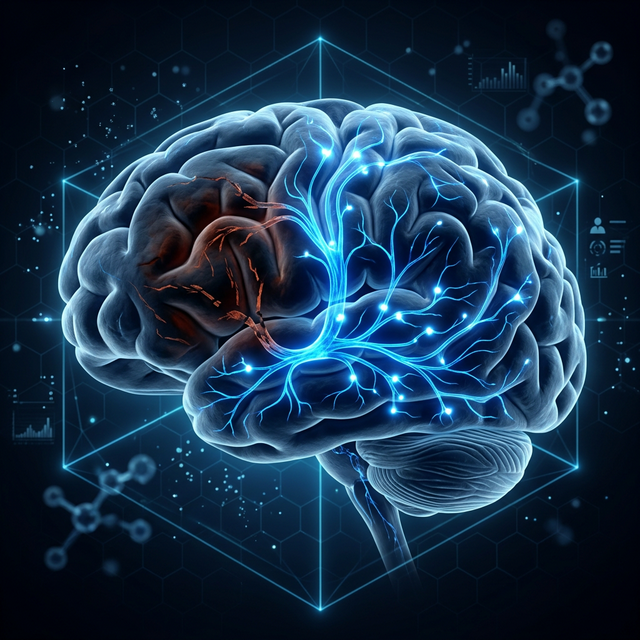
A stroke interrupts blood flow to the brain, killing neurons and leaving surrounding "penumbral" tissue in a state of chronic under-activity. These surviving neurons represent the key opportunity for recovery — and TMS is uniquely capable of reactivating them.
High-frequency excitatory TMS applied to the affected hemisphere can reactivate these silent circuits and drive formation of new neural pathways. Applied to the unaffected hemisphere, inhibitory TMS reduces compensatory over-inhibition and restores neural balance between hemispheres.
Research shows TMS combined with physical therapy produces significantly greater motor gains than physical therapy alone — particularly when started within 3–12 months of stroke onset.
One-sided weakness or paralysis from damage to the contralateral motor cortex and corticospinal tract.
Involuntary muscle stiffness and spasms following damage to motor control pathways, limiting daily function.
Up to 33% of stroke survivors develop major depression. TMS is FDA-cleared for depression and highly effective here.
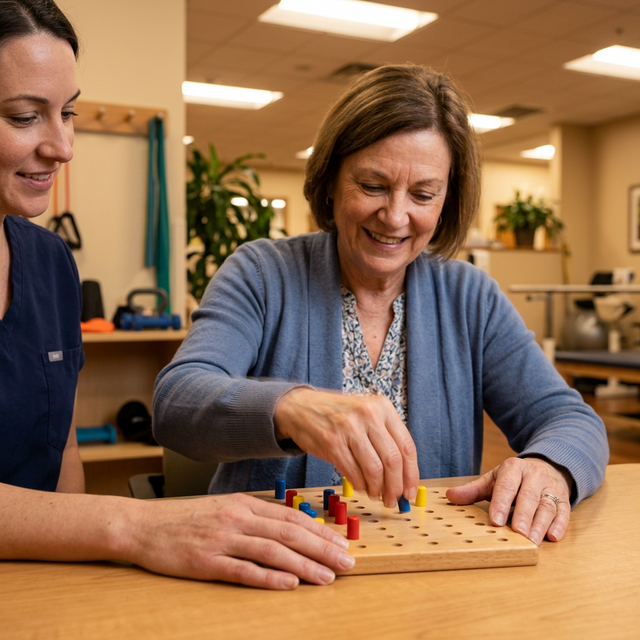
Unlocking residual motor potential and rewiring damaged motor pathways to rebuild strength and coordination.

Even when paralysis appears complete, many patients retain residual corticospinal connectivity that is functionally suppressed. TMS exploits this residual connectivity to reactivate dormant motor pathways.
Excitatory high-frequency TMS (10 Hz or iTBS) over the ipsilesional motor cortex increases its output to the spinal cord, while inhibitory TMS over the contralesional motor cortex reduces pathological interhemispheric inhibition. This dual-site protocol dramatically enhances motor rehabilitation outcomes.
TMS motor mapping measures residual corticospinal connectivity before designing your personalized protocol.
Excitatory TMS to the lesioned hemisphere and inhibitory TMS to the healthy hemisphere, restoring neural balance.
Targeted physiotherapy immediately following TMS capitalizes on heightened cortical excitability for maximum gains.
| Deficit | TMS Protocol | Expected Benefit |
|---|---|---|
| Arm & Hand Weakness | Excitatory 10Hz over M1 lesioned side | Improved grip strength & fine motor control |
| Leg & Gait Impairment | iTBS over lower limb motor cortex | Improved walking speed & balance |
| Spasticity | Inhibitory 1Hz over contralesional M1 | Reduced muscle tone & spasms |
Restoring the power of communication by reactivating language networks and reducing compensatory speech suppression.
Aphasia affects approximately 180,000 Americans annually, almost always from stroke. When stroke damages Broca's or Wernicke's area, the right hemisphere attempts to compensate — but this can actually suppress recovery of left hemisphere language networks.
Inhibitory TMS applied to right-hemisphere speech areas removes this maladaptive compensation and allows damaged left hemisphere networks to re-emerge. Combined with intensive speech therapy after each session, language recovery is significantly accelerated.
Published research demonstrates that inhibitory TMS combined with speech therapy produces greater improvements in naming, fluency, and comprehension than speech therapy alone.

| Aphasia Type | TMS Approach |
|---|---|
| Broca's (Expressive) Aphasia | Inhibitory TMS to right IFG to release suppression on left Broca's area; paired with speech output tasks. |
| Wernicke's (Receptive) Aphasia | Excitatory TMS to perilesional left temporal areas combined with comprehension-focused language therapy. |
| Global Aphasia | Sequential bilateral TMS protocol addressing both production and comprehension networks. |
TMS motor mapping to measure residual connectivity and identify optimal stimulation targets before treatment.
Excitatory and inhibitory TMS protocols precisely targeted to the lesioned and peri-lesional cortex, calibrated to each patient.
TMS sessions immediately followed by physical, occupational, or speech therapy — maximizing the neuroplastic window.
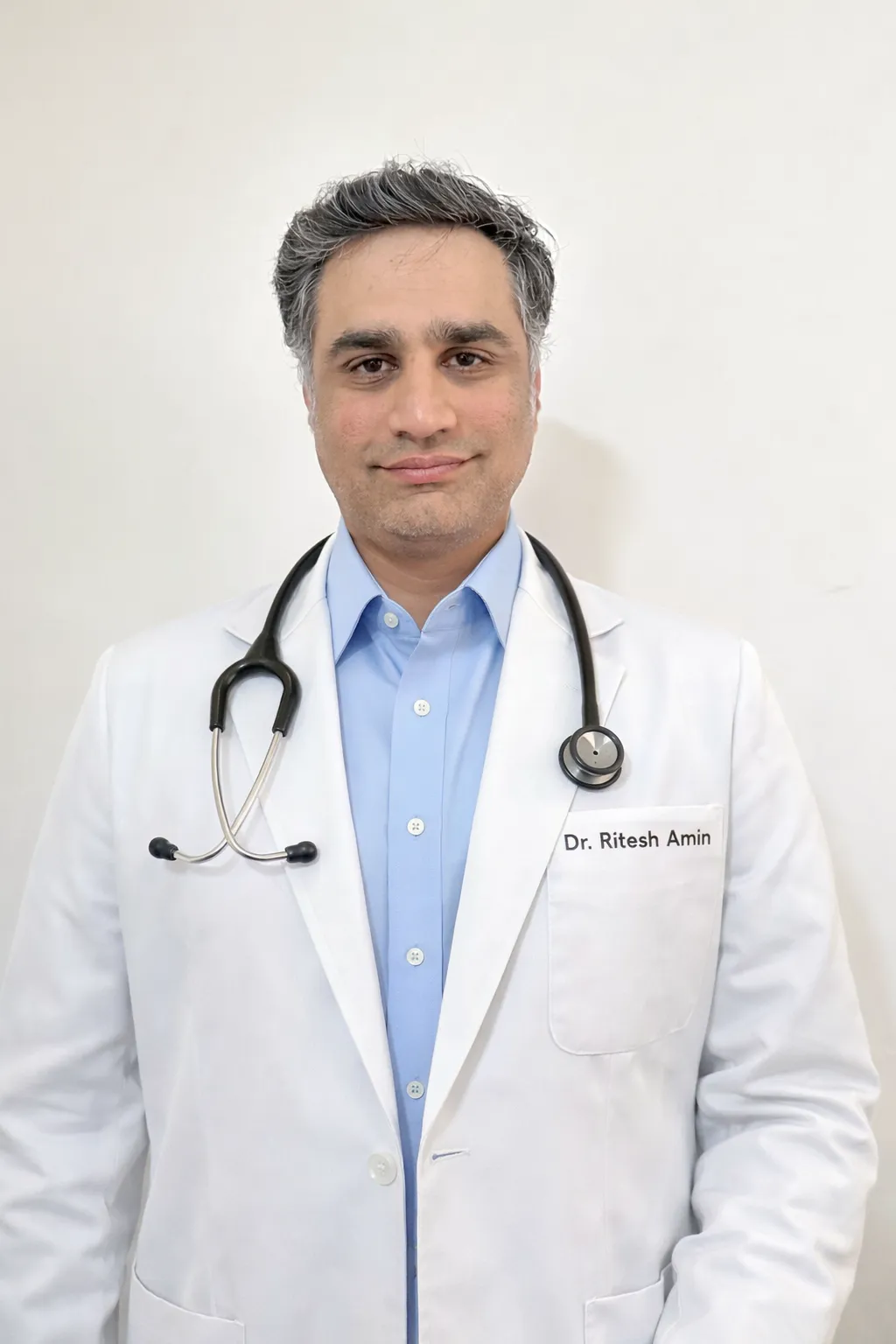
With over 15 years of clinical excellence, Dr. Amin applies cutting-edge TMS protocols for stroke rehabilitation — addressing motor recovery, aphasia, and the depression and cognitive challenges that accompany stroke.
Read Full BiographyHear from patients whose lives were transformed through Dr. Amin's care.
Dr. Amin evaluates residual neural connectivity and designs a personalized TMS protocol for your stroke profile and recovery goals.
Advanced TMS therapy can help you move past the plateau. Dr. Amin is ready to guide your recovery.
Book Your Consultation Today