Precision neuromodulation to restore normal motor function, calm overactive circuits, and help the brain reconnect — without medications or surgery.
Dr. Amin applies highly specific TMS protocols for each type of functional movement disorder — targeting the brain circuits responsible for motor dysfunction.
A cutting-edge approach to disrupting the abnormal motor patterns created by disrupted brain-body signaling — without medications or surgery.
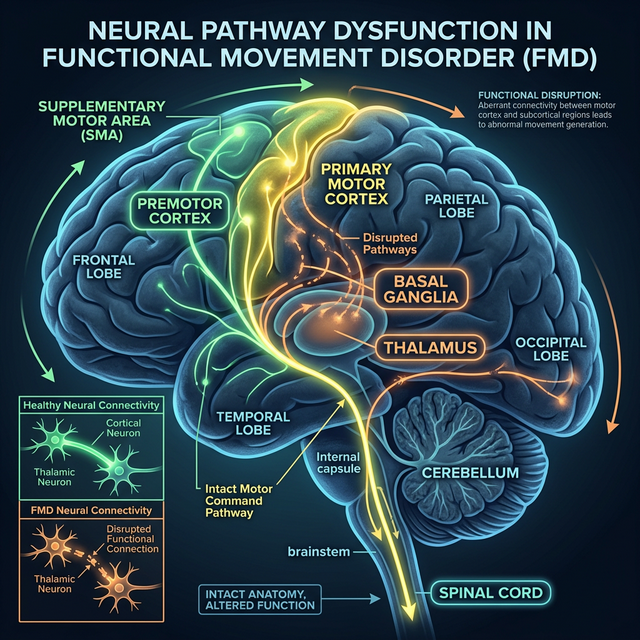
Functional Movement Disorder is a condition in which the brain produces abnormal, involuntary movements — not due to structural damage, but due to a disruption in how brain networks communicate with each other. Patients experience real, often disabling symptoms: weakness, abnormal gait, tremors, and jerks that cannot be explained by conventional neurological disease.
TMS offers a targeted intervention at the root of FMD — the motor cortex and supplementary motor area. By delivering focused magnetic pulses, TMS can interrupt maladaptive motor patterns and help the brain re-learn normal movement control, leveraging the brain's capacity for neuroplasticity.
Dr. Amin uses motor cortex mapping to identify the exact circuits driving dysfunctional movements, ensuring every TMS pulse is targeted precisely to the source of disruption.
Unusual or dragging walking patterns that have no structural cause but originate in miscommunicating brain circuits.
Loss of motor control or limb weakness with normal neuroimaging, caused by disrupted motor network signaling.
Sudden involuntary muscle spasms that are functionally-driven rather than caused by epileptic or organic disease.
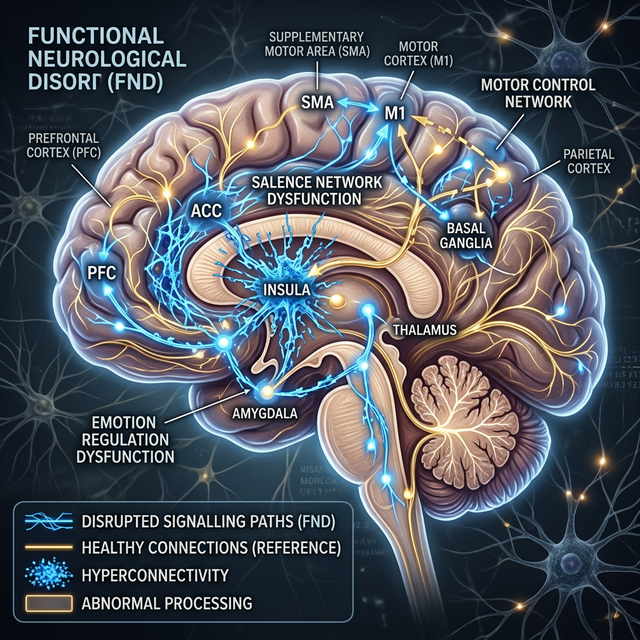
When the nervous system generates genuine, disabling symptoms without identifiable structural damage — TMS offers a direct path to neural recalibration.
Functional Neurological Disorder encompasses a spectrum of neurological symptoms — from seizure-like episodes and paralysis to sensory disturbances and speech problems — that arise from disrupted brain network function rather than lesions or classical disease. FND is not "psychological" or imagined; it is a real disorder of the brain's operating system.
TMS targets the specific cortical regions and networks that are known to be altered in FND. Research demonstrates that inhibitory or excitatory TMS over the motor cortex, premotor areas, and temporo-parietal junction can significantly reduce symptom burden by resetting the dysfunctional patterns of neural communication.
Dr. Amin identifies the key cortical networks involved in each patient's FND presentation using clinical evaluation and motor mapping.
Precise TMS pulses are directed at the overactive or underactive cortical regions driving the FND symptoms to restore normal signaling.
Treatment is integrated with physiotherapy for maximum neuroplastic benefit, with regular reassessment of functional outcomes.
FND is one of the most common reasons for neurological outpatient visits — yet it remains dramatically under-treated. TMS provides a direct, evidence-based biological intervention for this misunderstood condition.
Resolving abnormal, non-organic movement patterns through precision neuromodulation — targeting the brain, not the label.
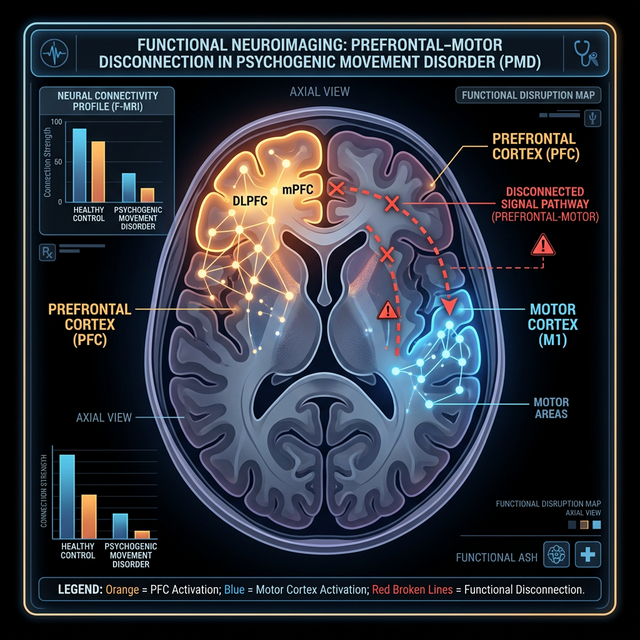
Psychogenic Movement Disorder (PMD), now more accurately called Functional Movement Disorder in modern nomenclature, refers to movements that are inconsistent, distractible, and incongruent with recognized neurological disease — but are nonetheless real and involuntary to the patient experiencing them.
The brain generates these movements through dysfunctional top-down motor control. Trauma, stress, or emotional events can alter the way the brain's prefrontal and limbic regions modulate the motor system. TMS directly disrupts this maladaptive loop by re-establishing cortical inhibition over the affected motor pathways.
Unlike purely psychological approaches, TMS treats the underlying neurological mechanism — often leading to faster and more durable resolution of motor symptoms.
| Symptom | How TMS Helps |
|---|---|
| Tremor at Rest | Suppresses overactive supplementary motor area firing that drives involuntary trembling. |
| Gait Disturbance | Stimulates bilateral motor cortex to restore coordinated walking patterns. |
| Limb Jerking | Targets corticospinal pathways to reduce myoclonic and choreiform movements. |
Calming debilitating involuntary trembling with precisely calibrated magnetic pulses — when medications haven't worked.
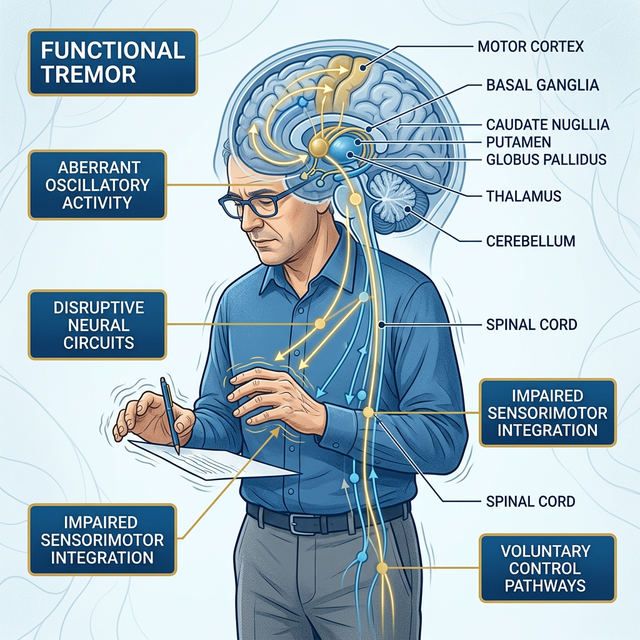
Functional Tremor is the most common functional movement disorder, characterized by involuntary shaking that is variable, entrainable (it synchronizes when patients perform rhythmic tasks), and inconsistent with organic tremor conditions like Essential Tremor or Parkinson's Disease.
The tremor originates from an abnormal synchrony between the motor cortex, thalamus, and cerebellum. TMS delivered to the primary motor cortex and premotor cortex disrupts this pathological oscillatory loop. Studies have shown that inhibitory rTMS at 1 Hz can significantly reduce tremor amplitude and frequency in functional tremor patients.
Dr. Amin distinguishes functional tremor from organic tremor through careful clinical assessment before designing a personalized TMS protocol — ensuring treatment targets the right circuits.
| Factor | Functional Tremor | Organic Tremor (e.g., ET) |
|---|---|---|
| TMS Target | Supplementary Motor Area + M1 | Primarily Motor Cortex |
| Protocol | Inhibitory 1Hz rTMS | Facilitatory High-Frequency |
| Expected Outcome | Reduction in tremor entrainability | Reduction in tremor amplitude |
Releasing abnormal muscle contractions and fixed postures caused by dysfunctional cortical motor control.
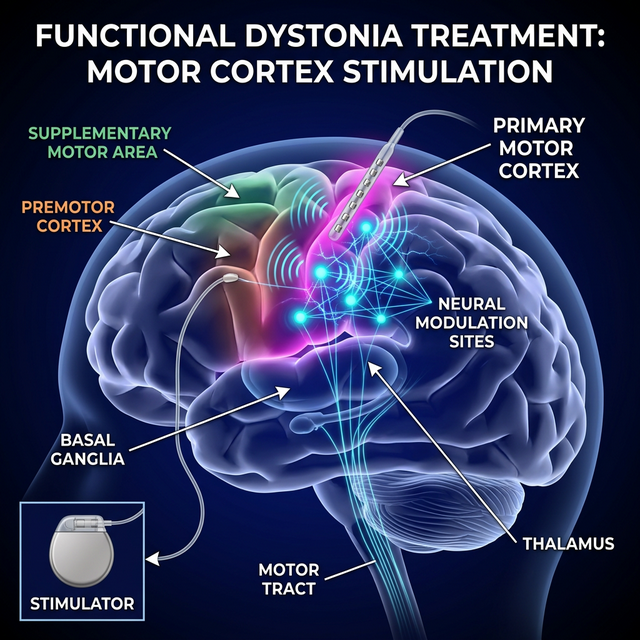
Functional Dystonia involves sustained or intermittent muscle contractions causing repetitive movements or abnormal postures. Unlike primary dystonia — which arises from basal ganglia dysfunction — functional dystonia originates in abnormal cortical processing and is often precipitated by injury, stress, or peripheral trauma.
Patients with functional dystonia often present with fixed postures, particularly of the hand, foot, or neck, that can be temporarily relieved with specific sensory tricks (a phenomenon called "geste antagoniste"). This trainability of the motor system makes TMS particularly effective, as it can leverage the same cortical plasticity to restore normal motor control.
We go beyond symptom management to address the structural and functional disruptions underlying motor disorders.
Using TMS-based motor mapping to identify exactly which cortical regions are driving abnormal movement patterns before treatment begins.
Highly targeted rTMS protocols calibrated for each functional condition — using the correct frequency, intensity, and location to disrupt maladaptive motor circuitry.
Combining TMS with physiotherapy to maximize neuroplastic gains — TMS primes the brain, while rehab reinforces the new motor patterns.
With over 15 years of clinical excellence, Dr. Amin is at the forefront of functional neurological disorder treatment. His customized TMS protocols address the unique motor circuit dysfunctions of each patient — from functional tremor to complex FND.
Read Full BiographyHear from patients whose lives were transformed through Dr. Amin's care.
Dr. Amin provides thorough neurological evaluations to determine if TMS can benefit your specific functional disorder and motor recovery goals.
Advanced TMS therapy can help you move past the plateau. Dr. Amin and our team are ready to guide your recovery.
Book Your Consultation Today