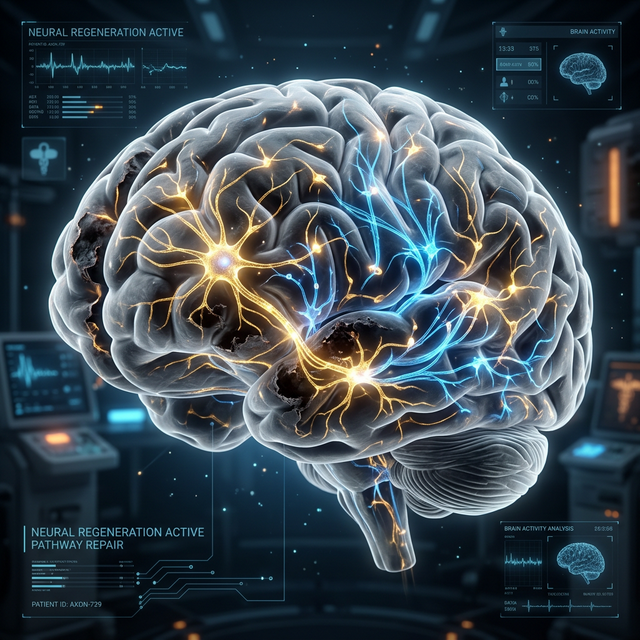
Harnessing precision neuromodulation to promote recovery, restore neural function, and accelerate healing after brain injuries and trauma.
Dr. Amin uses specialized TMS protocols tailored to each type of brain injury and trauma, promoting neuroplasticity and recovery.
A groundbreaking, non-invasive approach to stimulating damaged neural pathways and accelerating recovery after TBI.
Traumatic Brain Injury affects millions of Americans each year, ranging from mild concussions to severe brain damage. Traditional treatments often plateau, leaving patients with persistent cognitive, emotional, and physical challenges.
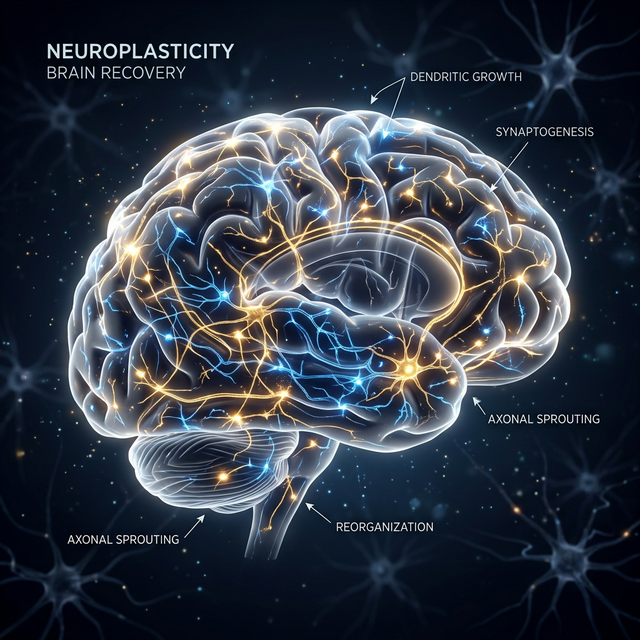
TMS therapy works by delivering precise magnetic pulses to the affected cortical regions, promoting neuroplasticity — the brain's natural ability to rewire and heal itself. Research demonstrates that TMS can reactivate dormant neural circuits, improve blood flow to injured areas, and reduce neuroinflammation.
Dr. Amin uses advanced MRI-guided neuronavigation to map the precise areas of injury, ensuring each TMS pulse reaches exactly where it's needed most.
| Symptom Category | Description |
|---|---|
| Cognitive Impairment | Difficulty with memory, concentration, processing speed, and executive function |
| Mood Dysregulation | Depression, anxiety, irritability, and emotional lability following brain injury |
| Chronic Headaches & Pain | Persistent post-traumatic headaches and neuropathic pain syndromes |

Whether caused by accidents, falls, sports injuries, or surgical complications, brain injuries require specialized neural rehabilitation.
Brain injuries can be acquired (from external forces) or non-traumatic (from oxygen deprivation, infections, or tumors). Regardless of cause, the result is disrupted neural connectivity that affects cognition, motor function, speech, and emotional regulation.
TMS provides a unique advantage in brain injury recovery: it works at the circuit level, not the chemical level. By stimulating specific cortical networks, TMS can help rebuild the neural highways that were damaged, complementing traditional physical and occupational therapy.
Dr. Amin conducts a thorough neurological evaluation to identify damaged brain regions and create a personalized treatment map.
Precise magnetic pulses are delivered to the affected cortical areas, promoting synaptic strengthening and neural circuit repair.
Over the treatment course, patients experience measurable improvements in cognition, mood, and functional abilities.
TMS is most effective when combined with concurrent rehabilitation therapies. It "primes" the brain to be more receptive to physical, occupational, and speech therapy interventions.
Accelerating recovery from concussion with targeted brain stimulation — no medications, no side effects, no downtime.
Concussions are classified as mild traumatic brain injuries, but the term "mild" can be misleading. Even a single concussion can disrupt the brain's delicate electrochemical balance, causing symptoms that persist for weeks, months, or longer.
While rest and gradual return to activity remain the foundation of concussion management, TMS offers an additional tool to accelerate neural recovery. By targeting the prefrontal cortex and other affected regions, TMS can help restore normal brain signaling patterns and reduce inflammation.
This is especially valuable for athletes, military personnel, accident victims, and anyone whose recovery is stalling despite conventional management.
| Symptom Category | Description |
|---|---|
| Brain Fog | Difficulty thinking clearly and processing information |
| Headaches | Persistent post-concussive headaches and migraines |
| Mood Changes | Anxiety, depression, and irritability |
| Light Sensitivity | Photophobia and visual processing difficulties |
When concussion symptoms persist beyond the expected recovery window, TMS offers a targeted path to relief.
Post-Concussion Syndrome (PCS) is diagnosed when concussion symptoms persist for weeks, months, or even years after the initial injury. Up to 30% of concussion patients develop PCS, experiencing a debilitating cycle of headaches, cognitive impairment, dizziness, sleep disturbances, and emotional changes that significantly impact quality of life.
Traditional treatments for PCS are limited — medications address individual symptoms (pain, sleep, mood) but don't address the underlying neural disruption. TMS directly targets the dysfunctional brain circuits responsible for persistent symptoms.
| Symptom Category | Description |
|---|---|
| Chronic Headaches | TMS targets the pain networks and cortical spreading depression patterns that sustain chronic post-traumatic headaches. |
| Cognitive Dysfunction | Stimulation of the dorsolateral prefrontal cortex improves attention, working memory, and processing speed. |
| Depression & Anxiety | TMS addresses the mood disruption and emotional dysregulation that develops after prolonged recovery periods. |
Research published in Brain Stimulation and Neurology journals has demonstrated that repetitive TMS (rTMS) can significantly reduce PCS symptom severity in patients who haven't responded to conventional treatments.
Supporting the brain's healing process after physical head trauma with advanced, non-invasive neurostimulation.
Head trauma encompasses a broad spectrum of injuries — from falls in the elderly to sports injuries, motor vehicle accidents, and workplace incidents. Even when imaging appears normal, the brain may sustain diffuse axonal injury that disrupts the coordinated firing of neural networks.
TMS offers a unique modality for head trauma recovery because it works at the network level. Rather than addressing a single neurotransmitter imbalance, TMS enhances the connectivity and communication between brain regions that were disrupted by the traumatic force.
This makes TMS particularly effective for patients who:
| Patient Group | Benefits of TMS Therapy |
|---|---|
| Sports-Related Injuries | TMS accelerates recovery for contact sport athletes with repetitive head impacts or diagnosed concussions. |
| Fall & Accident Recovery | Elderly patients and accident victims benefit from TMS-enhanced neural rehabilitation programs. |
| Military & Veterans | Blast-induced TBI and combat-related head injuries respond well to targeted TMS protocols. |
We go beyond symptom management to address the structural and functional disruptions caused by brain trauma.
Using state-of-the-art qEEG mapping to identify precisely which cortical networks are underactive or hyperactive following an injury.
Delivering highly specific MRI-guided magnetic pulses to the identified regions of dysfunction, prompting the brain to build new neural pathways.
Combining exact TMS therapy with neurological support, mapping progress over time to ensure total, sustainable recovery.
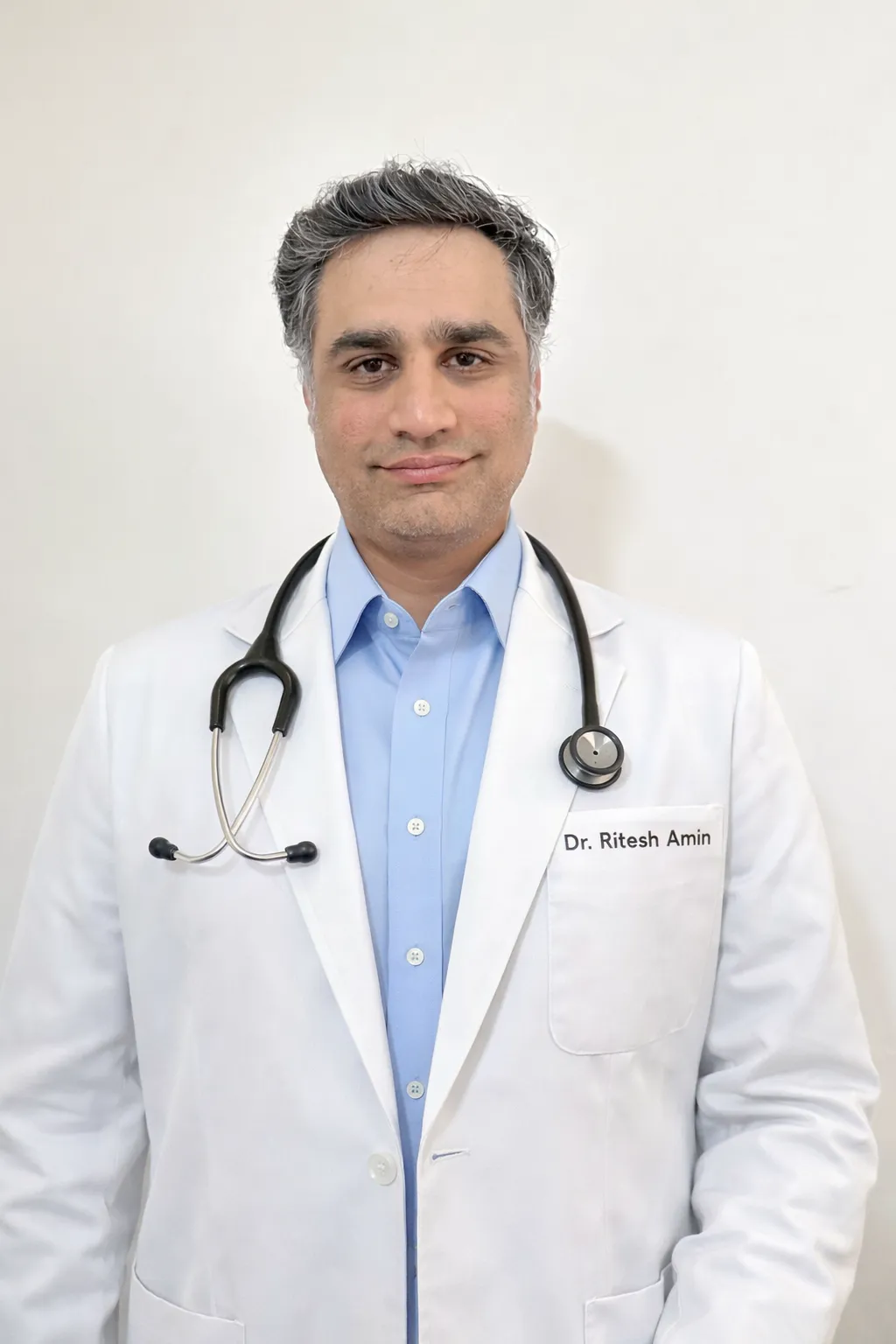
With over 15 years of clinical excellence, Dr. Amin is dedicated to utilizing the most advanced mental health technologies to help patients achieve deep, lasting remission from complex emotional and neurological conditions, including Traumatic Brain Injuries.
His clinic stands as a premier center for FDA-approved Transcranial Magnetic Stimulation (TMS), providing highly targeted protocols that map specifically to an individual's brain topology and injury profile.
Read Full BiographyHear from patients whose lives were transformed through Dr. Amin's care.
Dr. Amin provides thorough neurological evaluations to determine if TMS therapy can benefit your specific injury and recovery goals.
Advanced TMS therapy can help you move past the plateau. Dr. Amin and our team are ready to guide your recovery.
Book Your Consultation Today